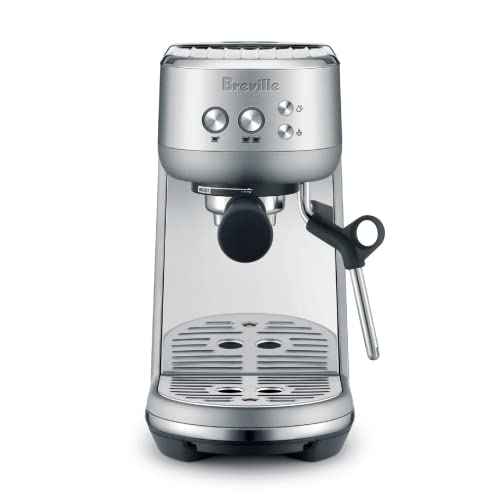

The Sage Bambino at a competitive price and the Sage Bambino Plus at a competitive price are the two compact manual espresso machines that share a shape, a footprint, and most of the brewing hardware. They look almost identical on a counter. The difference is in what they do once the espresso is in the cup.
This comparison covers what you actually get for the £256 price gap, and whether the upgrade is worth it for the way you make coffee at home.
Quick Verdict
The Sage Bambino wins if you only drink straight espresso, americanos, or already enjoy steaming milk by hand.
The Sage Bambino Plus wins if you regularly make milk drinks (flat whites, lattes, cappuccinos) and want consistent microfoam without learning the technique.
The deciding factor is milk. If milk drinks are at least half of what you make, pay the upgrade. If they're not, save the £256 and put it toward a better grinder.
Side-by-Side Specs
| Spec | Sage Bambino | Sage Bambino Plus |
|---|---|---|
| UK price (Amazon) | £439 | £695 |
| Milk system | Manual steam wand | Automatic milk frother |
| Built-in grinder | No | No |
| Coffee input | Ground coffee only | Ground coffee only |
| Body | Stainless steel | Brushed stainless steel |
| Form factor | Compact countertop | Compact countertop |
Detailed dimensional specs (water tank, exact width, wattage, boiler type) are not consistently published in the Amazon UK listings. Both share the same compact Bambino chassis and brewing path.
Price and UK Availability
Both are widely stocked at Amazon UK, Currys, John Lewis, and AO. The Bambino sometimes appears at deeper discount than the Plus during sale periods, which can stretch the price gap to £300 or more during Black Friday and Boxing Day.
The headline £256 gap pays for one upgrade only: the automatic milk frother. Everything else (brew unit, pump, control logic) is fundamentally the same. Whether £256 is fair for an auto-frother depends entirely on how often you make milk drinks.
Design and Build Quality
Visually the two machines are near-identical from the front. Same compact footprint, same control buttons, same group head, same removable drip tray, same portafilter cradle. Both are stainless steel.
The Plus has slightly different frother hardware visible on the right side: the auto frother attachment replaces the standard steam wand. Both attachments are removable for cleaning.
Build quality is identical. These are the same chassis with different milk systems. If you have counter space for one, you have counter space for the other.
Espresso Shot Quality
Both machines produce the same shot. Same group head, same pump, same brew temperature. A blind taste test between an espresso pulled on the Bambino and the same beans pulled on the Bambino Plus would not reveal a difference.
This is important: paying £256 more for the Plus does not get you better espresso. It gets you easier milk.
Both machines work best with a quality external grinder. Neither has an integrated grinder, so the cost-to-add a grinder is the same on either machine (a competitive price typical).
Built-in Grinder (or Lack of It)
Neither machine has an integrated grinder. Both expect ground coffee in a portafilter, ideally fresh-ground from a dedicated espresso grinder.
This matters because the £256 gap between the Bambino and Bambino Plus would buy you a respectable entry-level grinder (Baratza Encore ESP at around £200, Eureka Mignon Manuale at around £250). For buyers without a grinder, putting the £256 toward grinder rather than milk upgrade often produces better daily coffee.
The opposite trade-off: if you already have a grinder, the £256 has nothing else useful to do except buy the auto frother.
Milk Frothing
This is the only meaningful difference between the two machines.
The Bambino has a manual steam wand. You hold a milk jug under the wand, open the steam valve, and texture the milk yourself by adjusting jug position and angle. With practice (typically 2 to 6 weeks of daily use), you produce silky microfoam suitable for latte art. Without practice, you produce flat warm milk with bubbles.
The Bambino Plus has an automatic frother. You pour cold milk into the jug, place it under the frother attachment, press a button to select milk type and temperature, and the machine textures the milk without intervention. The output is consistent microfoam from day one. The trade-off is less control: you cannot fine-tune the texture for specific drink types the way a manual steamer can.
For pure flat whites and cappuccinos at home, the Plus produces café-quality results immediately. For latte art specifically, manual steaming on the Bambino has a higher ceiling once you practise, but most home users never reach that ceiling.
Daily Operation and Learning Curve
Both machines warm up quickly (faster than most full-size espresso machines) and produce a shot in under 90 seconds once warm.
The Bambino requires you to learn three things: dose volume, tamp pressure, and milk steaming technique. The first two are common to all espresso machines. The third is the one that takes weeks of daily practice.
The Bambino Plus requires you to learn two things only: dose volume and tamp pressure. Milk is handled.
For buyers happy to spend a few weeks failing at milk before they get good at it, the Bambino is fine. For buyers who want consistent results from week one and aren't interested in milk steaming as a skill, the Plus saves frustration.
Cleaning and Maintenance
Both machines have removable drip trays, removable portafilters, and standard cleaning routines.
The Bambino's manual steam wand needs a quick wipe and purge after each use. The Plus's auto frother attachment has more parts (the milk jug attachment, the magnetic stirrer) and needs a more thorough rinse after each session, plus periodic deep cleaning to prevent milk buildup inside the frother path.
Both descale every 30 to 90 days depending on UK water hardness (London/Southeast: more frequent; Scotland/Wales: less frequent). Both accept the same Sage descaling solution.
Net: the Plus is slightly more maintenance-intensive because the auto frother has more cleaning surfaces. Not significant unless you skip cleaning, in which case the Plus develops milk problems faster than the Bambino develops steam wand problems.
Who Should Buy the Sage Bambino
You'll enjoy the Bambino if you mostly drink espresso, americanos, or long blacks; or if you already enjoy manual milk steaming and don't need automation; or if you want to put the £256 saving toward a better grinder; or if you treat the milk-steaming technique as part of the home barista craft.
Skip the Bambino if milk drinks are most of what you make, or if you don't want to learn manual milk steaming, or if you find inconsistent home milk frustrating rather than rewarding.
Who Should Buy the Sage Bambino Plus
You'll enjoy the Bambino Plus if you regularly make milk-based drinks (flat whites, lattes, cappuccinos) and want them to taste right from day one; or if multiple people in the household will use the machine and you want consistent results regardless of skill; or if your weekday mornings are time-constrained and manual milk steaming feels like a step too far.
Skip the Plus if you only drink espresso, or if you already steam milk competently, or if the £256 has a better home as a grinder upgrade.
Final Verdict
Most UK home buyers who are choosing between these two machines should think of the question as: do I want to learn milk steaming?
If yes: Bambino plus a grinder, with the £256 saving going to the grinder.
If no: Bambino Plus, accepting that you're paying for milk automation rather than espresso quality.
The Plus is not a better espresso machine than the Bambino. It is the same espresso machine with an easier milk attachment. Buying it for "better coffee" misunderstands what the upgrade is.
For more context, see our full reviews: Sage Bambino review and Sage Bambino Plus review. For the broader question of whether you want a compact manual machine or a fully automatic bean-to-cup, see our espresso machine vs bean-to-cup guide.
Frequently Asked Questions
Is the Bambino Plus worth £256 more than the Bambino?
It is worth the upgrade if milk drinks are a regular part of your routine and you don't want to learn manual steaming. It is not worth the upgrade if you only make espresso, or if you already enjoy the manual steaming process, or if you'd rather spend that money on a grinder.
Can I steam milk on the Bambino as well as on the Plus?
In theory yes. The Bambino's manual steam wand can produce microfoam suitable for latte art with enough practice. In practice, most home users do not reach that level. The Plus produces consistent café-quality microfoam from week one without any practice.
Do either of these machines have a grinder?
No. Both require ground coffee in a portafilter. For best results pair either with a dedicated espresso grinder (Eureka Mignon, Baratza Encore ESP, or similar). Pre-ground supermarket espresso coffee will work but produces noticeably worse shots than fresh-ground.
Which is louder?
Identical pump noise. The Plus's auto frother makes a slightly different sound during milk texturing (the magnetic stirrer agitates the milk), but neither machine is loud enough to wake a sleeping household.
Will the Bambino Plus replace a bean-to-cup machine?
Not really. The Plus automates milk but still requires you to handle the portafilter, dose, tamp, and operate the brew controls. A true bean-to-cup machine handles every step from beans in the hopper to drink in the cup. If you want "press a button, drink appears" use a bean-to-cup machine instead.
Compare to Other Alternatives
Still deciding? See how this machine stacks up against the alternatives UK buyers consider: